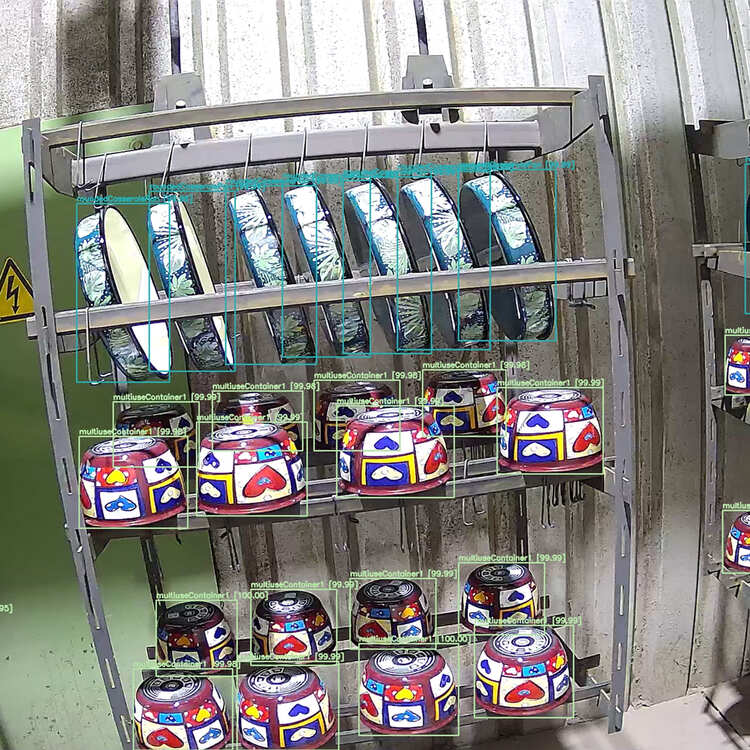
Digital transformation suite for manufacturing and smart production
factoryNET is a platform for digital transformation in manufacturing that enables organizations to better monitor, analyze, and optimize production processes using data from across the factory. It is designed for companies that require reliable visibility into production status, higher efficiency, and stronger real-time operational control.
Instead of relying on isolated software tools, factoryNET integrates multiple capabilities into a single system: data collection and visualization, machine and process monitoring, analytics and reporting, and decision-support functions.
How factoryNET is used in practice
factoryNET serves as a central platform for monitoring and managing production operations. Typical applications include real-time tracking of machine and process performance, monitoring workplace environmental conditions such as temperature, humidity, noise, and pollution, automatic reading of instrument values and visual product inspection, early identification of problems and irregularities before they affect quality, and standardized monitoring of key metrics and KPIs.
For example, a manufacturing organization can monitor machine conditions such as vibration, energy consumption, and sound levels, alongside workspace conditions and product quality in a single interface, reducing downtime and costs while improving efficiency.
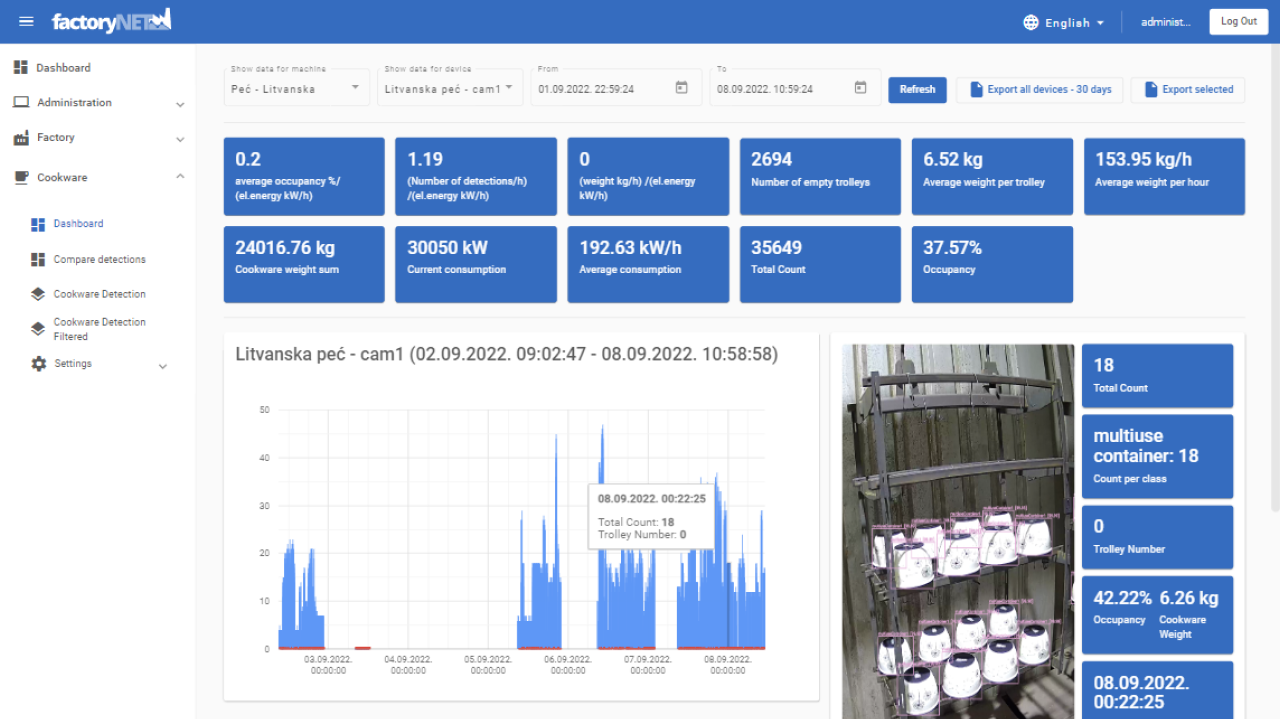
Value for manufacturers
factoryNET supports a transition from reactive to proactive production management. Instead of discovering issues only after they impact operations, the platform provides insights that enable timely intervention. This contributes to increased production efficiency and quality, reduced unplanned downtime and waste, improved use of resources and equipment, and easier maintenance and capacity planning.
Modularity and development
factoryNET is a modular platform, allowing functionalities to be introduced gradually and combined according to the needs of a specific production environment. Beyond core monitoring and control, additional modules can support specialized supervision and optimization, creating a long-term foundation for digital manufacturing improvement.